

Where are the Older Trad-Wives?
You Do Not Have to Be Good

Lately (because of Yesteryear? Because of a new generation of young trad-wife influencers?), it seems everyone on my feed is asking, “Where are the older trad-wives?” And I don’t have to wonder where they are at all because I know exactly where they aren’t.
There’s a stretch of road near me that I avoid if I can. It’s out of the city, past the outlets and tourist traps, surrounded by farmland and Pennsylvania fieldstone houses and laundry drying on lines stretched above the horizon. When people think of Lancaster County, they think of the Amish. Some think of conservative fundamentalism. That’s the Lancaster I remember of my childhood.
When I drove into the city of Lancaster two years ago, I felt surprised, thought, “This feels different than I remember.”

I rarely speak or write about some aspects of my childhood. Most of you know the conspiracy theories that drove my father into isolationism and subsequently drove my mother into embracing a quiverfull lifestyle. But most of you do not know that when I was a preteen, my father produced a product that homeschool suppliers couldn’t keep stocked.
The product sold faster than he could build it and therefore all children in our household were recruited (without payment) to participate in its production. He called the business a family one and even after my brother’s death and his divorce, he kept the logo the same—a father, mother, and their brood of children all holding hands together.
The product—a flimsy photo-copied “journal” with a clear colored cover and plastic ring bindings aimed at helping exhausted moms keep order in their homes—won awards and my parents were cited as leaders and pioneers in the homeschooling movement of the 1990s. Because of the journal’s popularity, we spent the better part of my adolescence and teens traveling all around the country in a motorhome or van, going to homeschool conventions to hawk our wares.

A homeschool convention, at least in the 1990s, was like comic-con but for homeschoolers. Thousands and thousands of homeschoolers converging upon convention centers for events known by their acronyms like CHAP, HEAV, and UTCH.1 The convention centers were lined with hundreds of vendors and all these vendors were like a traveling circus on their circuit, converging upon convention centers in their RVs and white utility trailers packed with books and goods and wares for sale, all promising to make your kids turn out real good.
The costumes for our comic-con were: for the fathers, brown polyester pants and shirts with sweat stains in the pits, mustaches; for the mothers, denim jumpers with appliquéd apples or ducks or skirts and shirts that one could “modestly” nurse with; for the children, modest clothing always, skirts for the girls, long pants for the boys.
You could tell who the Upper Echelon of homeschoolers were by the white shirts and blue skirts/pants they wore—this signified allegiance to Bill Gothard’s cult-programs, ATI/IBLP. The next level were the ones who dressed their broods in coordinating outfits, like the Von Trapp children, smart and stuck-up. Then there were the ones wearing prairie dresses or raccoon-skin caps. There were usually a few hundred war re-enactors thrown in there. These, you could be assured would either argue the south had won the “War of Northern Aggression” or another American Revolution was imminent and we should all be prepared (i.e. have guns, and…wear buckskin?).
Most families were or aspired to be Quiverfull families. Those who had fewer than three kids were whispered about, the assumption being they were using birth-control.2 We older kids were tasked with care of the younger kids, this was not just common, it was mandatory. There were actual seminars teaching parents how to train their older kids to care for their younger kids, this included cooking for them, dressing them, and spanking them when necessary.
I wish I could tell you that there were not many small children sexually abused in these environments. But I cannot. When you give children adult responsibilities, they cannot help but twist adult actions.

Recently, a post has been circulating on Substack about Elsie Dinsmore. I read it and felt such grief. My parents didn’t only fanatically promote these books among our friends, they sold them by the truckload in our homeschool business. The days the pallets of Elsies arrived was always a busy one in our household, boxes and boxes of heavy pink and blue hardbound books had to be unloaded, inventoried, organized, and packed for orders.
I read every comment on that post and felt my own culpability rising up within me. I am positive my hands handled the books that ended up in some of those women’s hands.
If you protest that I’m not culpable because I was a child, then you fundamentally miss the point of what those books and this movement was all about. It was all about making children bear the burden of adulthood, adult ideas, adult practices, adult responsibilities, and adult emotions while they were still children.
Much of the work of disentangling ourselves from that kind of childhood is learning to not carry the burden or blame of the world on our shoulders everywhere we go.

I was the second child and only girl in a family with eight children. In our family, there was only one role for a girl to play and become: wife and mother. Everything I knew about my future was wrapped up in becoming a wife and a mother and I was in the perfect training ground, as the sole female child in our large family.
The greatest threat to a lifetime of becoming only a wife and mother is education. So while these conventions and this homeschool lifestyle were purportedly all about education, it was all about a certain kind of education: the kind that squeezed out any hope or dream from the mind or heart of a girl until she was small enough to be funneled through the pipeline of early marriage through to motherhood.
Even the uniformity of the clothing we all wore—it was moving toward one thing: even the playing field, show us as subhuman receptacles, feminine, check; sweet disposition, check; able to procreate, check.3
We were given books like the Elsie Dinsmore books, Daddy-Long-Legs by Jean Webster, and stories like that of Maranatha and Matthew Chapman and so many others.
It was not the exception to the rule to be a 14 or 15 year old girl and have an older male express interest. I cannot even tell you how many homeschoolers I knew during my teens and twenties who married just after turning 18 or who married older men who first expressed attraction to them when they were 14 or 15—citing these girl’s great maturity as their excuse for attraction to children.
That “great maturity” came at a great cost for many of us, namely, our entire childhood.
This was not a bug in the system, this was a feature. To be thought of as mature enough for marriage as a child was proof that this system was working, our parents were training us so well that the badness was gone and there was only sweet, pliant, obedient, marriageable goodness left.4
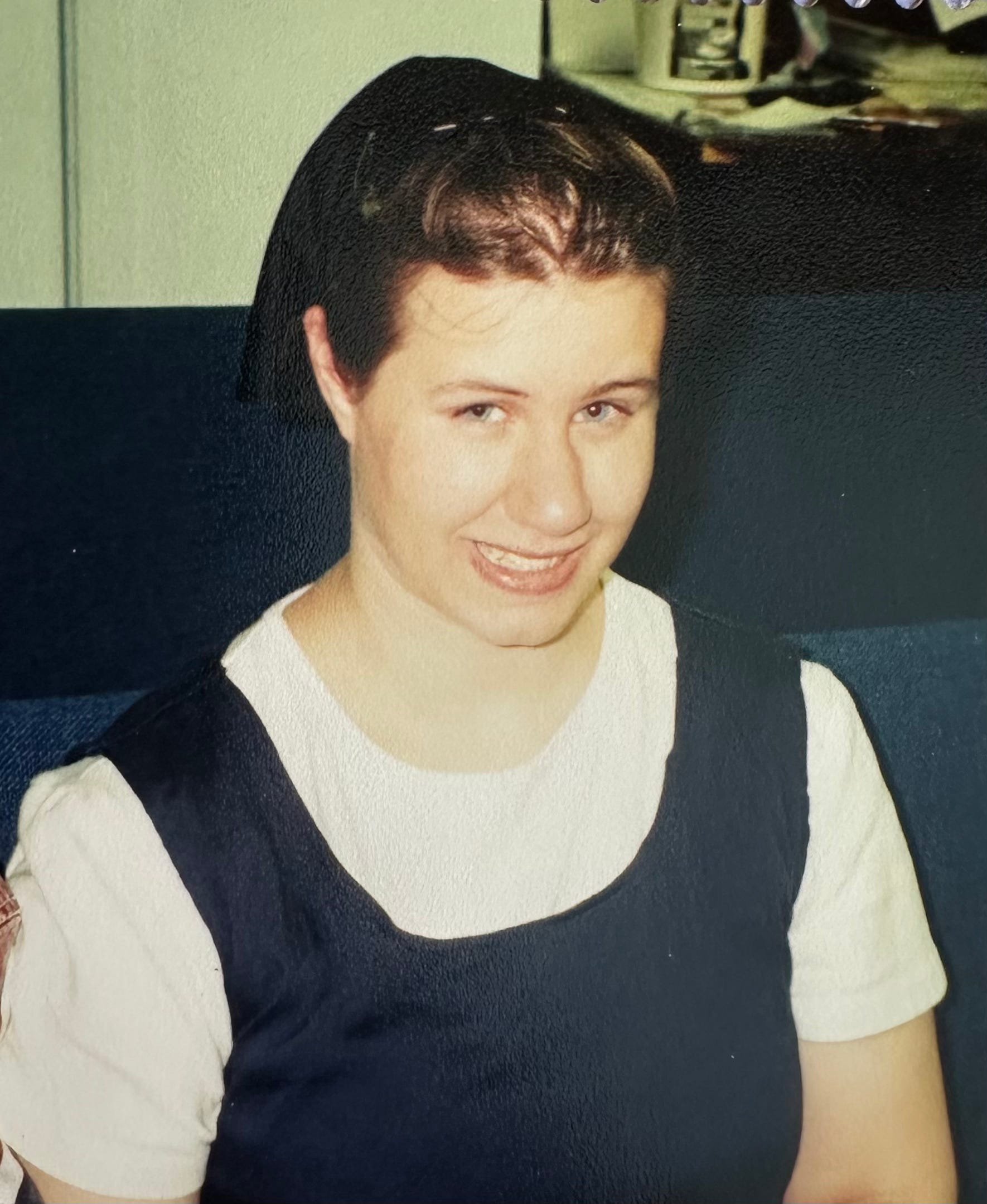

I was a stubborn, hard kid. I don’t say that to shame myself. I know my strengths and they didn’t fit well in that environment. I was a questioner, a doubter, an early and proficient talker and reader. I didn’t fit the mold they were trying to cram me in. I hated the Elsie Dinsmore books and wouldn’t read past the first one, no matter how much my mother wanted me to. I refused the dresses as much as I could or cheekily wore pants beneath them. I papered my bedroom wall with quotes from L’Engle and Donne and Lowry. I kissed boys and let myself be kissed by them, and broke rules whenever I could.
I snuck in all the bad I could just so I could feel something besides the towering piles of shame I felt at never being good enough.5
But I remember the exact day I decided I was going to be good. I was 15. I told no one. I came home from my first Joshua Harris seminar (our parents ran in the same circles but he was only a few years older than me and a just rising star), and I remember thinking to myself, “If I can be good, maybe someone would marry me and take me out of all this?”
You know how the story ends. No one married me for a long, long, long time, and when he did, I was a fully grown adult and it was because he loved me, not my virginal, fertile, youthful purity.

Well, here I am, 45 years old. Back in the land of my youth. Driving the same highways that took me to all those convention centers, brought me to the families of other peak homeschoolers, took me to my first Joshua Harris conference, and left me, a child, heartbroken again and again and again and again when the hope of marriage and motherhood didn’t happen for me.
I’m so painfully and acutely aware of how of most of the marriages I saw unfolding as a teenager and young adult have now mostly ended in catastrophic divorces, leaving dozens of kids in their wake. But also, their parents and my parents have divorced too, those who held up marriage as this highest good, when underneath all that public profit, there was abuse and darkness of all kinds.
There are some of these families with seeming success stories. They plaster photos of their generational wealth in the form of children and grandchildren across Facebook, proof their system “works,” and how good God has been to them because they did it right. But it doesn’t work for everyone or even most of them, and they say it’s because the women aren’t submissive or because the children don’t obey (it’s never the man’s fault).
I say it’s because someone, somewhere woke the heck up and disrupted their system.
My mom did that. I hated her for it for a long time because I was still stuck in the system and didn’t believe there was anything good outside it, and she probably hated me too. She woke up hard though, startled herself and everyone in her path. She went from wearing homemade jumpers and head-coverings, canning our food and planning homeschool curriculum, to wearing sequined shirts and drinking wine and giving the middle finger to the fundamentalist homeschool establishment in the community that shunned her.6And she was hated for it. Hated. The definition of shunned.
She had no resources of her own, no education beyond high-school, had done nothing except be pregnant, birth, nurse, and teach her kids for over twenty years. She had no marketable skills and she got out.
She moved to the other side of the country. She put herself through undergrad and then a masters. She started a successful business. She bought a house. She renovated the house. She remarried (and then was widowed) to a good and humble man who loved her and raised my brothers as soon as they aged out of the custody arrangement that made my wildly dysfunctional dad their custodial parent.
My mom told me the other day she’s “living the dream,” but this wasn’t the dream we were raised with, none of this was the highest ideal.
She has some great kids, but by the standards we measured when I was a kid, we’re a bunch of abject failures. Most of us estranged from our father. Among us an alcoholic, a twice-divorced kid, a cohabitating kid, a gay kid, one kid arrested and on the sex offender list, and me, not only married to a divorced guy, but also someone who can’t leave well enough alone but has to turn over every single rock in my life to see what’s hiding underneath it, no matter what I find there. But if the dream is having most of your kids living near you and half your grandbabies there all the time, yeah, she’s living the dream.
It took hell to get there though.
And there were no sessions for how to walk through hell at the homeschool conventions.

Lately, Nate and I have been learning to differentiate, a more difficult task than I ever imagined it would be. But when it’s been ingrained in you to be pleasing, kind, to not have or share differing opinions lest you offend the fragile ego of the men in your life or, if you do share them, share them knowing they will be overridden by the wisdom, intelligence, and God-given authority of your husband anyway, well, it’s hard to undo all that damage.
I’m angry that I traded my birthright, the creative and risky child I had been, the strong and stubborn girl I was, the opinionated and intelligent teenager I became, for a bowl of patriarchal porridge. I’m angry it’s taken me this long to really start waking up and realizing that even if I left all of that behind me, it’s all still so, so deep in my bones.

That stretch of the highway I mentioned?
I avoid it whenever I can because I have bad memories attached to it. A particular phase of my teenage years was completely dominated by the presence of two families in my family’s life, one more than the other. I can’t think about either of them without feeling heaps of shame. Not about who I was with them, but about who I felt like I had to be around them. Some of the most shame-filled moments of my life are attached to interactions with various parts of those families. And, worse, I’m positive my family was a source of shame for other families. We were all so enmeshed, so disgustingly unable to dissent or disagree or set ourselves apart or say, for goodness sake, this is wrong.
Recently, though, Nate and I drove the stretch on our way to a used bookstore. I told myself to breathe as we passed through Paradise, through Gap, through Coatesville, through Downington. Through these towns that dotted a trajectory of my life, a time period I wish I could forget. I can’t forget them though, they’re there, a part of me, I wear them within me and on me.
But I can talk about them. I can acknowledge the harm that was done to me, by me. I can say, with as much courage as I have, that there are no older trad-wives because there are rarely exceptions to the rule and child brides are an abomination and men who exploit women and children will always be found out and your fiery, sparky, sparkly, stubborn heart is beautiful, not in need of shepherding or training or submission to a sex and power hungry man, but of beating and believing and being and becoming everything it was ever meant to be. A good, good heart.
And, because goodness is so fraught for so many of us, not just good, but whole.

Where are the older trad-wives? They grew up. Their pre-frontal cortexes closed. They stopped being pregnant or nursing constantly and were able to bring their bodies out of the constant hormonal fluctuations that kept them feeling crazy unless their lives were impossibly controlled by legalism and systems that made them feel small. They suffered enough to realize life wasn’t a mathematical equation of do this = get that. They kept loving their kids when people told them their kids were unloveable.
Where are they now? They got out.
If you’re reading this in email (which 98% of you do!), consider pressing the heart (♡) at the bottom or top of this email. It helps my work get more eyeballs on it, which is nice for me and kind of you!
Does anyone want to tell them these are terrible acronyms or should we just snicker about it here?
None of us knew what birth-control was, we just knew you shouldn’t use it.
It has never been lost on me that skirts/dresses were the preferred dress of choice for so many of these families who were also pushing young courtships, betrothals, etc. They say it’s because of modesty, but listen: skirts offer easy access and you can’t tell me that doesn’t enter their sordid minds. I’ve had grown men tell me that to my face.
I’m convinced one of the reasons so many patriarchs in the homeschooling movement either implicitly or explicitly encourage young marriage is because they cannot look at a virginal body without sexualizing and objectifying her. She is not a child to him, she is what his wife’s body looked like before he impregnated her a dozen times. But he can’t admit that he’s sexualizing her as she is, he must instead imagine her married to another patriarch so her body becomes less a threat to him.
Also a feature of the system.
Just kidding. My mom would never give the middle finger. She woke up but NOT that kind of up.
Sheesh, after reading this I feel like I need to go lay out in the grass and let the rain fall on me for a bit. Brought up some many memories that were once naively pure but are now mixed with so much grief.
Growing up and recovering from these spaces as a man is it's own kind of weird journey, because you realize you were raised to be a perpetrator of much of what you're talking about here Lore, and you may even, as a boy-not-yet-a-man, start to act out that role because it's all you know to do. That brings its own particular shame and grief.
P.S. I'm pretty sure we've talked about this before, but I have to believe we crossed paths at the Massachusetts homeschool convention at one point when we were kids.
As someone who was firmly raised to be in the Bill Gothard/IBLP trad-wife trajectory but got out, this post was both validating and tender-like-a-bruise to read. As a young teen I used to help my dad pass out pamphlets and worksheets for the local Bill Gothard seminars we hosted at many churches in our area.
I see so many twenty-somethings bragging about getting their young families back to “traditional, conservative Christian values” (i.e., 80s-90s fundamentalism) and I wince because I know (viscerally) what kind of fruit that can bear in a family unit decades later. I won’t divulge details that aren’t mine but let’s just say, it didn’t turn out in the way all those homeschool conventions promised my parents it would, painfully so.