

Cerulean Blue Sweaters, Yesteryear, and Landfills
What makes a thing good or beautiful, the maker or the beholder?

If you’re on Instagram, maybe you saw that I got the buzziest book of the season in the mail from Book of the Month Club yesterday afternoon. I read for an hour right away and then two more hours in bed last night, finishing it around midnight.
Verdict: I hated it, one star.
But that’s not the point of this piece.

A few months ago, I was sitting around a big round table of Very Serious Writers and we were probably talking about Love is Blind, because I maintain that the most serious people I know are obsessed with reality TV (Ask me why. I have reasons). But from across the table, I heard one of the chieftains of our Very Serious Writers mention a book I’d finished weeks before and hated. You may have read all my reasons why here.
The next day, same time, same place, different table, I ranted yet again about the book and later Nate said, “Hey, you were kinda hot about it, like maybe a little too hot.” He was right and I pulled the one to whom I ranted (spoiler, it was Shawn Smucker) aside and said, “Hey, I was too hot about that. I’m sorry. Forgive me?” We laughed and then we exchanged two or three sentences on that a subject that is up there with the problem of evil for most talked about subject in the history of the world.
Who decides what is good art and what isn’t?
If, as the long unattributed quote, “Beauty is in the eye of the beholder,” is true, then the only one who decides what is good and what isn’t, is you. And I believe that’s true. Except we live with some of the worst wealth disparity in history and the rich are only getting richer, and money is almost always the bottom line. In a slush pile there might be a hundred drafts, one of which could win the Booker or Pulitzer for its writing and story, but ten of which have high concept, highly marketable, hot cultural topics and less than stellar writing. Many editors will go for the latter because it will sell more books, ie., make money.
Case in point: I’ll bet a good percentage of you haven’t seen Angel Down circling the rounds yet, right? Angel Down just won the Pulitzer, with a high concept and good writing, and so you’ll start seeing it more and more, but until this week, pretty much crickets.

A few weeks ago, probably in anticipation of The Devil Wears Prada II releasing, the first movie started showing up on our streaming platforms and Nate, who had never seen it, pressed play.
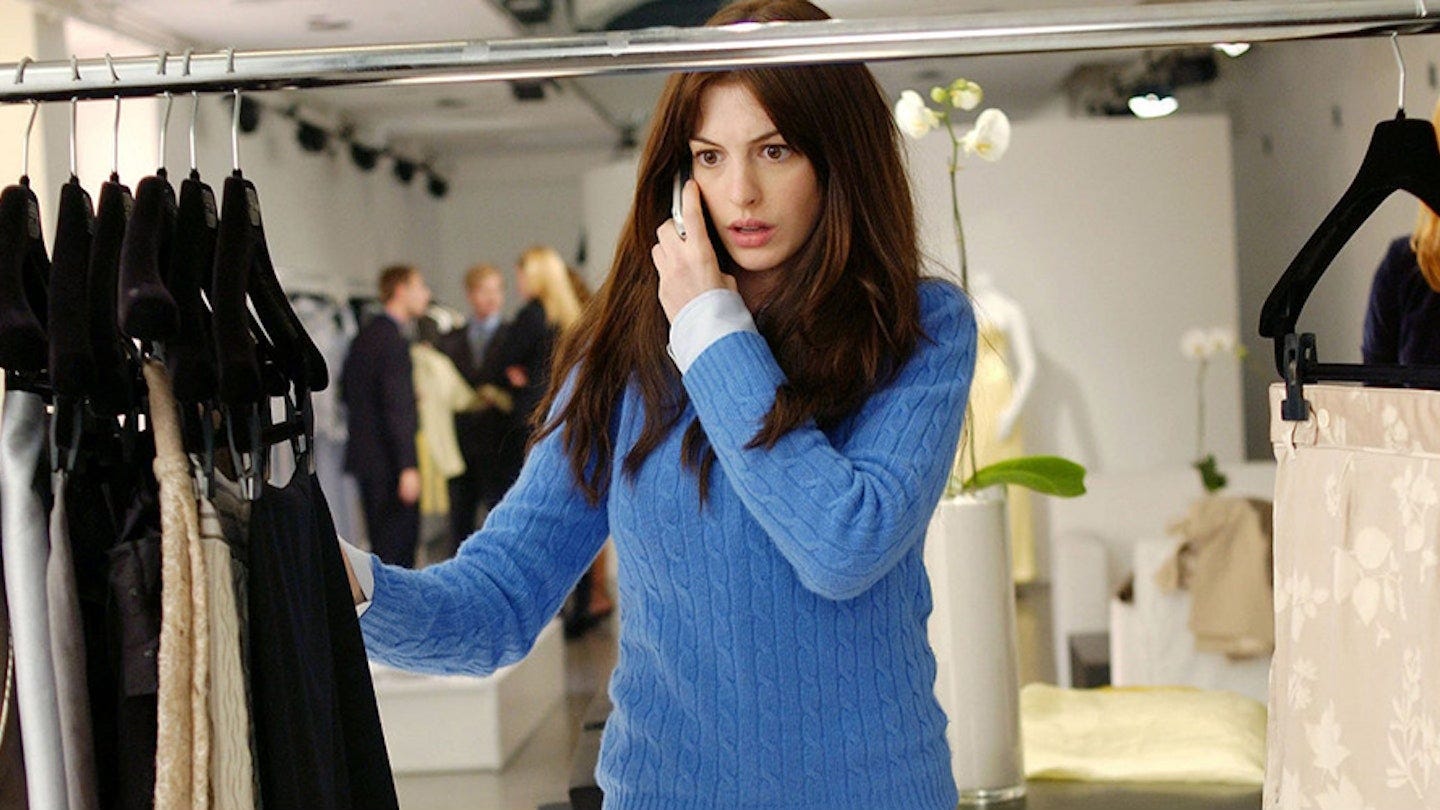
There’s one scene in there that’s pretty iconic, especially if you’re a girl who probably owned the same blue sweater Anne Hathaway’s character, Andi, wore in that scene (🤚🏼). Andi is scoffing at the minor differences between two turquoise belts when Miranda Priestly looks down Meryl Streep’s perfect porcelain nose and says,
“Oh, okay. I see. You think this has nothing to do with you.
You go to your closet, and you select…I don’t know, that lumpy blue sweater, for instance, because you’re trying to tell the world that you take yourself too seriously to care about what you put on your back, but what you don’t know is that that sweater is not just blue, it’s not turquoise, it’s not lapis, it’s actually cerulean.
You’re also blithely unaware of the fact that, in 2002, Oscar de la Renta did a collection of cerulean gowns, and then I think it was Yves Saint Laurent, wasn’t it? who showed cerulean military jackets. And then cerulean quickly showed up in the collections of eight different designers. Then it filtered down through the department stores and then trickled on down into some tragic Casual Corner where you, no doubt, fished it out of some clearance bin.
However, that blue represents millions of dollars of countless jobs, and it’s sort of comical how you think that you’ve made a choice that exempts you from the fashion industry when, in fact, you’re wearing a sweater that was selected for you by the people in this room from a pile of ‘stuff.’”
Spoken as one who has always taken myself a bit too seriously to care about clothes, point taken.
But I do take books seriously. I do take writing seriously. And I think good writing matters, especially as we are headed into whatever the next iteration of book writing and publishing is now that we have AI ideating, drafting, writing, and editing at the touch of a button. Experts say that within three years, we will not be able to tell as readily as we can now that something was written by AI. Running it through AI detectors will render a 0% back.
That scares me a little and I think it should scare all of us.

This morning I remembered the cerulean blue sweater I had back in 2006 and how it was made of cheap acrylic or some poly-blend, pulled off a second hand rack because that’s all I could afford, and probably “knit” by machine in a sweat shop in south Asia.
I thought about how two hundred years ago Edmund Cartwright invented the weaving machine and hundred and fifty years ago, when Eli Whitney invented the cotton gin and then how less than a hundred years ago, clothing was standardized and then shipped over here from sweatshops and how we often only wear something an average of 7-10 times before we pass it on or throw it out and it ends up in landfills so large you can see them from space.
I thought about how my favorite cerulean blue sweater from twenty years ago probably still exists somewhere on this planet in some form, resisting the creep of disintegration and decomposition, steaming in a mountain of cast off clothing.
That’s what high fashion and good taste got us to:
Eventual trash.
Now, there’s a part of me that would argue that there’s more worth to words than to clothing, but there’s another bigger part of me that knows they’re the same thing at their root: self-expression. Or, art.
Beauty may be in the eye of the beholder, but someone, somewhere made that thing you find beautiful with their own mind and heart and hands and vision. And so I have to believe that what actually makes something beautiful is the maker, not the beholder.
And that when we talk about what’s good or bad art, we have to talk about how difficult it is to make good art and not just consume everything indiscriminately.

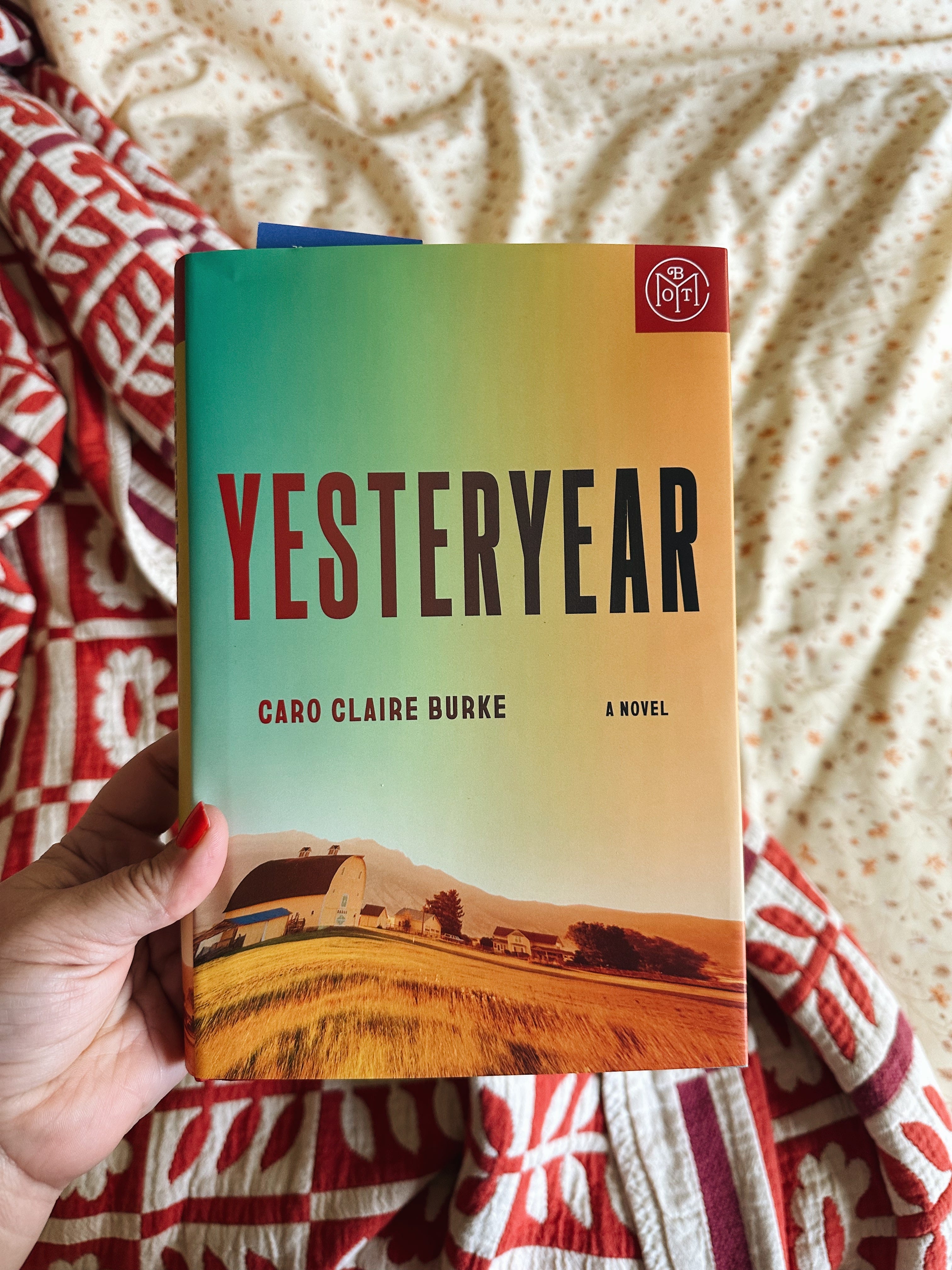
I hated the book I read last night but I truly believe the author of it loves it, and that does make it beautiful, in its own way. I thought the writing was meh even if the story could have been great. Other people disagree. They think the writing was excellent even if the story wasn’t.
More and more I’m less and less interested in agreed upon dictates of what is or isn’t good art because it is, like the problem of evil, an unanswerable question more suited to philosophical discussions and not any real resolution. You can like something I don’t. You can yuck my yum. I really don’t care, not really. Liking different things is what makes us interesting. I’m more interested in all the things that happen between the ideation of a thing and its final resting place, the landfill.
Because in the end, Pulitzer prize winning books end up there too.
What makes a thing good is that it changes the maker and it changes all those who come in contact with it, and all those changes are toward putting more goodness into the world, even if the art itself “goes gently into that good night.”
On this definition, the book I read last night was good, even if I don’t like it, so was Theo of Golden, so is Angel Down, and East of Eden and The Brothers Karamazov and hundreds of thousands of other books I love or hate. So is the novel I've been working on for a year and a half, even though most of the time when I think about it, I think it’s awful.
And even that, if you think about it, is good. It means I’m getting somewhere, I’m changing by degrees, even if it sucks along the way.
If you’re reading this in email (which 98% of you do!), consider pressing the heart (♡) at the bottom or top of this email. It helps my work get more eyeballs on it, which is nice for me and kind of you!
Substack has effectively validated my decision to skip Yesteryear (seems boring and also I am extremely picky about people representing the interior life of religious piety accurately). Also, your novel is NOT going to be awful. <3
So many thoughts. A) I love your hypothesis that serious writers love reality TV because I know far too much about the Mormon Wives and their Secret Lives. B) If it makes you feel any better, most people I know loved Theo and most people I know hated Yesteryear, although I think that's less about the writing and more about the lazy stereotyping (which is, of course, part of the craft of writing, but even with beautiful prose I think a lot of my circle was primed to hate that book). C) I love when people get fiery about books because it shows they care. D) This week, the National Ambassador for Young People’s Literature stepped in shit for calling most of children's literature bad and then people got mad at me for--not AGREEING, but seeing his point, because criticizing children's literature isn't "lifting each other up". Because kids, apparently, aren't serious enough human beings to have meaningful literature and the feelings of authors are far more important than the quality of stories we're telling them. 💀 All of this to say: I love a good literary critique so keep 'em coming, friend! Even though I hate Jayber Crow hahaha. ;)