

The Death of My Book
A story about The Understory that I still can't believe is true

On the outskirts of a tiny Adirondack town, no stoplights, no gas stations, there is a gravel pull-off with a nondescript red gate at its southern edge. Through the gate, down an overgrown path, across a little used pipeline, you will duck beneath the bow of a large beech and into a quiet sanctuary of trees. If you amble farther in, keeping your eyes alert for wildlife and lichen, you will begin to see trunks widen and ferns lengthen, and the undulating bodies of long dead trees growing ecosystems so tiny and precise they seem put there by fairies, the sign of old growth everywhere.
You will have arrived when you see the pointed carcass of a tree known to local foresters as Tree 103. Her crown lays to the east, her trunk showing the way, and her roots are still deep in the earth. She was once the tallest tree in New York state until she fell in a windstorm five years ago. My friend Philip found her and reported her fall to the caretakers of the old growth pine grove. When someone called the tree “dead,” a forestry professor at the local college said, “Maybe, but I prefer to think she’s just not vertical anymore.”
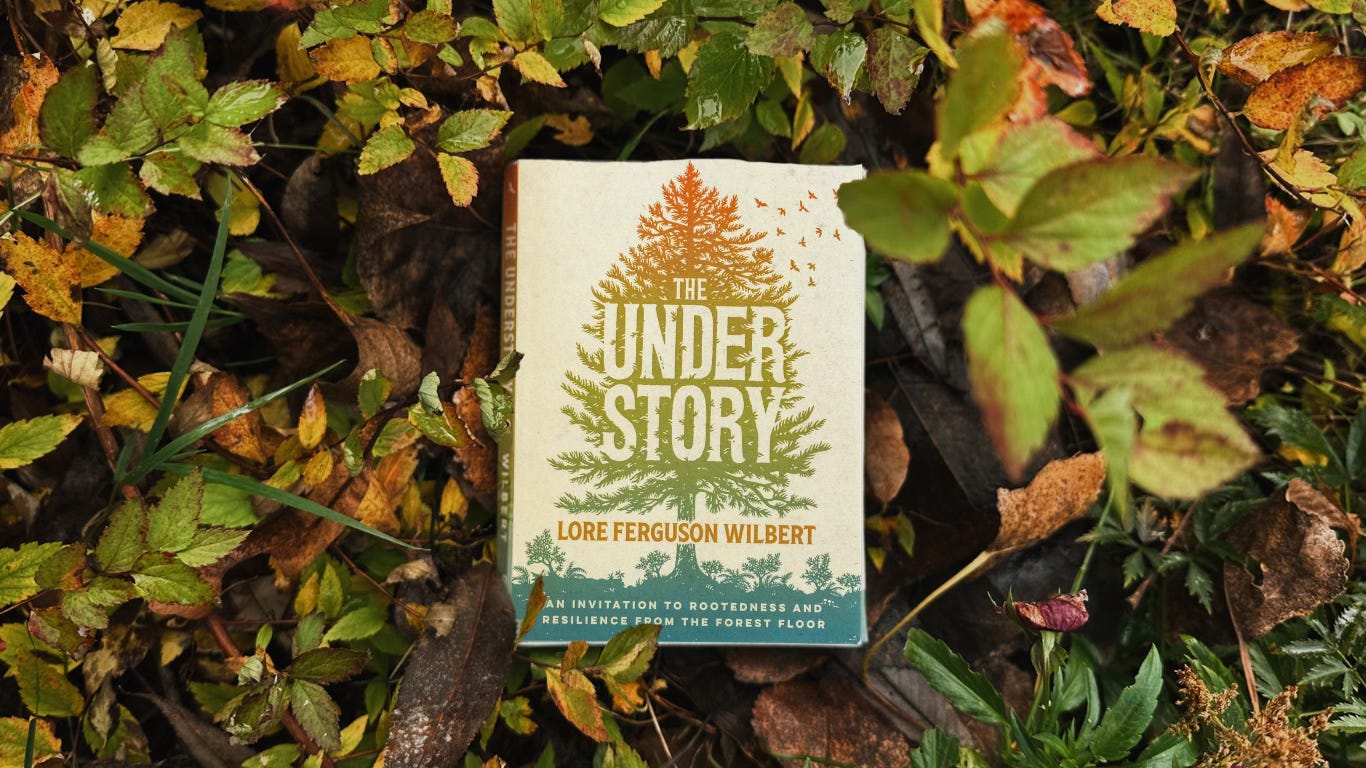
This is the story I open my book The Understory with. If you have read it, you know the book is about the death of what once stood tall and strong and now has become, as John Keating would say, “worm food.”
I write about soil, erosion, mycelia, bogs, and fires. I write about decomposing human bodies and regenerative forestry and walking a labyrinth covered by two feet of snow. I write about the things in my own life that fell and felt dead, but perhaps—I was willing to consider—they just weren’t vertical anymore.

They say when you write a book, you have to be prepared to live its message in ways you can’t imagine when you start. This has always been my experience.
I released a book about the need for human touch three weeks before our world went on lockdown for the pandemic, leaving people isolated, touch-less, and aching. My book felt like insult to injury and I never knew how to talk about it afterwards. Then I put out a book about asking questions and the truth is, I have never asked more than in the years since.
I thought that the experience of The Understory would be that I was putting to death so many things about my life, faith, and family, and they would all rise up again eventually in a different form—like new growth on a nurse log.
What I did not know was that there was so much more death for The Understory ahead.
I did not know she would be dead before her second birthday.
(This is the part of the post where everything in me wants to put a paywall, but that’s just self-protection and ego. The truth is, I owe this post to the public, and if you would like to subscribe and continue to read it for free, I would be thankful.)

What you need to know is that I’m going to be very careful about how I write about this. You don’t need to know all the reasons why, though I do wish I could tell you. Instead, I’ll start with this:
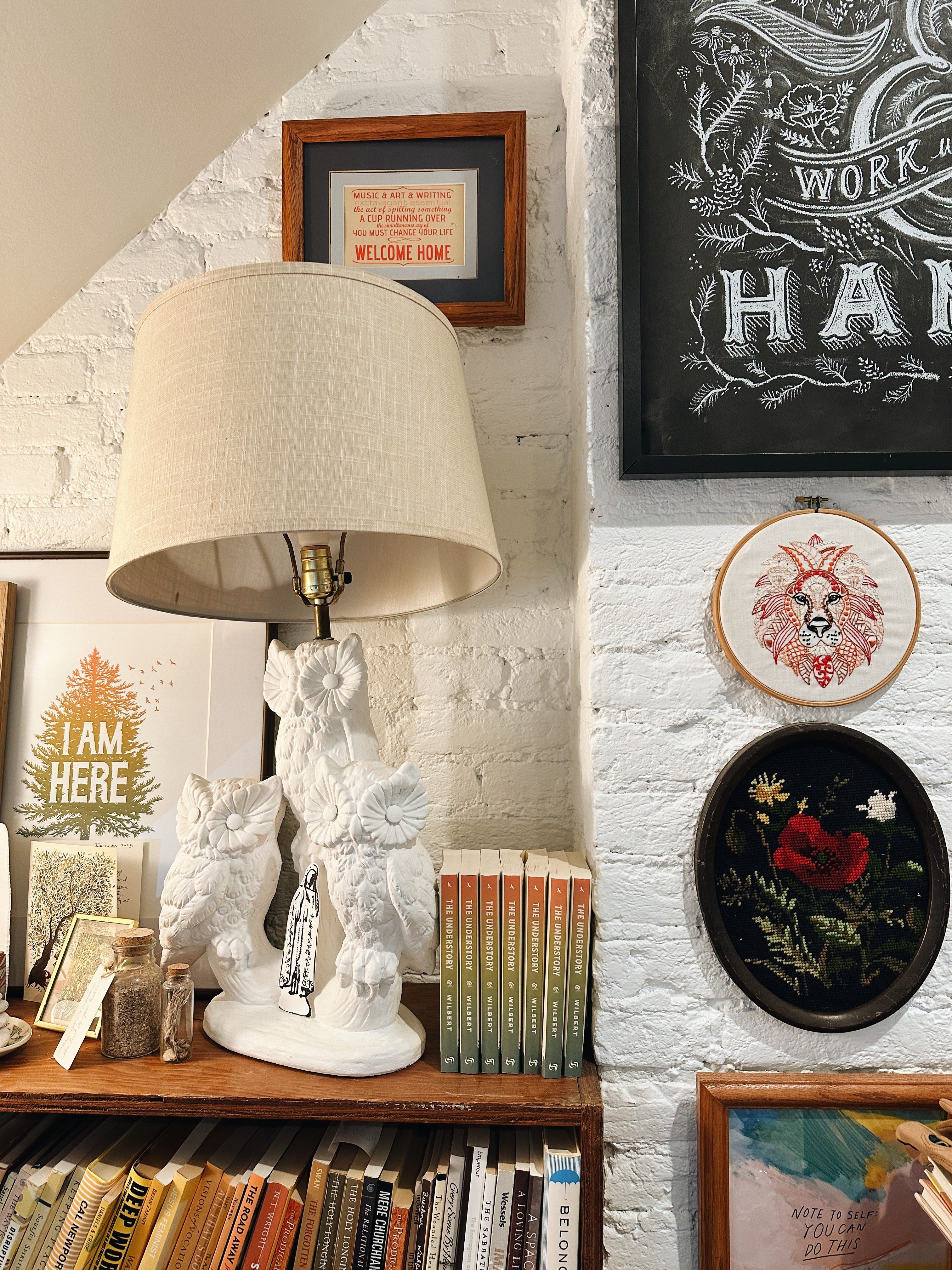
A few weekends ago, I was working quietly behind the back counter in the Sun Gallery at Nooks and I overheard two strangers talking to one another, both not native to the area, neither one had been to Nooks before. Despite what happened next, I knew neither one had any idea who I was or that my book was sitting mere inches from one of them. I don’t make it a habit to announce my presence to people perusing the bookstore as announcements are not what bookstores (or books) are for.
Nonetheless, in a room full of thousands of beautiful books, one of the strangers reached for The Understory, tucked it in his hand, made his way over to the big blue chair under the many-paned windows, and spent the next thirty minutes reading. He didn’t check his phone, he didn’t gaze out the window, he didn’t look bored. I glanced up a few times out of the corner of my eye. I didn’t wonder if he would buy it, I just thought to myself how fun it is to sometimes get to witness something like that.
Especially because that little book had an awful entrance into the world.

It went something like this:
We had a pretty normal amount of preorders, which, if you’ve been around any authors screeding about their books releasing, you know preorders are important. The warehouses, to our knowledge, were stocked and ready to release the books into the hands of readers on May 20. I had danced for the algorithmic gods, given offerings to the podcasting queens, made sacrifices that might as well have been from blood but certainly from tears, and I felt good about this release. Maybe even great.
The thing is, I love The Understory. Of all my books, she’s the one I love the most and the one I’m most proud of for existing. I wrote her slowly, surely, sauntering through the forest, gliding through rivers and lakes, penciling notes into my tiny field notebook, trying to remember the scent of things, the feel of things, the largeness of them and the smallness of them, trying to capture all of that in a book that I knew didn’t fit the model of Christian Spiritual Growth Books That Sell Well.
The Understory is the book I wrote that feels the most like me and therefore I thought it would attract the readers who know me most but also new readers who didn’t know me yet but might want to.
And the other thing is, people liked The Understory. It won Book of the Year from Englewood Review of Books. It was on multiple Top Ten Lists, Best of Lists, named Best Book by booksellers who love really, really books. Emily P. Freeman said of it, “I didn’t even know I was waiting for this book.” Bill McKibben (swoon!) said it was “remarkably acute and resonant.” A.J. Swoboda said it was “sheer magic.” Aundi Kolber, Therapist+Author called it “rare and beautiful.”

I believe, with all my heart, that social media doesn’t sell books, that word of mouth sells books, and that when we love a thing, we tell a friend who tells a friend who tells a friend.
I have staked my career on this belief, written about it copiously, mentored writers in this direction, practiced this belief with all of my energy, let its ethos run through my work in every way. If you have been reading Sayable for a long time, you know this isn’t a flash in the pan belief for me. It is a conviction of mine and one I wish more people shared.
So I did all the things but I staked my flag on that belief. I ran my launch group with that ethos running through it, pushing people out into their worlds instead of further into an online one. And I felt good about all of that. On May 20th, I felt good.
That week, though, people didn’t get their books as promised or they got a book, but it wasn’t The Understory as we had planned it.
Amazon, it turned out, hadn’t checked in their boxes of stock and without the book being checked into their inventory, it triggered a Print on Demand feature that many book publishers have turned on by default1 in case stock runs low. It’s meant to be a stop-gap, to give publishers time for reprints.
Everyone who ordered from Amazon got the wrong book. Many of those who ordered from elsewhere (I arrived to do a book event at an indie bookstore and they had two boxes of the wrong book delivered) got the wrong book. Nearly every time we thought that the right book was or would be in people’s hands, we found out it was the wrong book in their hands.
In a week I should have been celebrating, it was a nightmare. For the next four weeks, my agent, editor, marketing and sales teams tried to navigate this and attempted to make it right. I tried to get people the right book—at physical cost to my publisher and emotional/mental cost to me. It took everything out of me for that first month of The Understory’s existence. It took a full month for booksellers to have it in stock and able to be ordered (June 17th, by my records).
The wind had been knocked out of my sails but it’s a tough business to be in if you’re not a special snowflake or selling salacious secrets and I didn’t want to be a problem child. We—I, my agent, editor, and the sales team—agreed that we would let the summer pass quietly, let any buzz die down, and try to relaunch the book in the fall with much fanfare and hoopla.

The fall rolled around and perhaps it was just internalized insecurity, the adrenalin having worn off from the spring, or general fatigue (we’d just moved six hours south), but it didn’t feel to me that there was much interest in relaunching it. I realized no one was going to back this book but me and I would not shill my way to a sold book. I would not woe is me all over the Internet. I would not invent or inflate crises to get people to buy my book. I would not become a one-note-pony on people’s feeds. I would not beg my friends to talk about my book or spite my enemies by talking all the time about the good feedback I was getting from readers about the book. I would trust the book to the world and trust the word would spread through the mouths God gave us all.
I added links in my headers and footers on my Substack, pinned a reel in my Instagram, linked solely to Bookshop for purchase, and then peppered mention of it into pieces or posts wherever it felt natural or appropriate. It would be a long trickle, I decided in my heart, and I would be fine with that because that is in keeping with my ethos on book writing and publishing. I believe in the long haul.
I’ve disentangled myself from Amazon almost completely, work part-time for an independent bookseller, and I have tried and succeeded to put my money—literally—where my mouth is. And I was fine with it. I was 100% unequivocally fine with it! See my exclamation point? That’s how you know I’m telling the truth.
I was so fine with it that when it came time to pencil in May 20, 2026, The Understory’s second birthday, I felt happy about it, finally energized again and excited to do a big post about it, encourage new readers to Sayable to check it out, buy it from their indie bookseller or mine, tell a friend about it. I had a whole thing planned.

Several weeks ago, Shawn, my friend and the proprietor of Nooks, mentioned in passing that they were beginning to run low on inventory of The Understory and he hadn’t been able to order new copies. I chalked it up to a timing or shipping issue, joked about the war in Iran and the straight of Hormuz, and didn’t think of it until a week later when I remembered to ask him about it again. “Still not in stock,” he said. “I’ll message my contact and see what’s up,” I said.
Ten days later, I heard back.
It was the worst possible news.

But first I want to tell you about this. A few weeks ago a friend of mine got the actual worst possible news, I mean, like awful, awful news, and they got it in nearly the same 24 hours they got the best possible news. Like, imagine the best news you’ve ever gotten and the worst news you’ve ever gotten, and smash them into the same day. That was their day.
And somewhere in that awful, awful day, they’d looked up at their bookshelf and saw the gradient spine of The Understory and something about it called out to them. They hadn’t read it yet and it was just sitting there and they pulled it down. Hours later they were sending me photos from pages of it, underlined and starred passages about the existence of death and life coexisting. That’s what the whole book is about, these tensions of death and life coexisting. It’s one of the truths that helps me make the most sense of this world. It recalibrates me, reorients me, and restores me
And in this most awful day, those words did that for my friend too.
I get messages like this from readers and friends frequently. The Understory is not a happy clappy book. It’s not one you gush about to friends over wine and tapas. It’s a book you curl into yourself with, envelope yourself in your blanket of choice and your drink of choice, and cry it out with. It’s a book that’s meant to take someone who’s grieving but also grasping for hope in the midst of it and to help them remember that grief and hope always go hand in hand, even if one seems louder than the other. Its original subtitle was Field Notes on Grief from the Forest Floor and I was sad when we had to let that one go.
My point is, this book has meant something to someone, a whole lot of someones.

A few bookish nerd facts:
Fewer than 4% of books published sell 1000 copies.
Fewer than 1% of books published sell 5000 copies.
When a book sells through its first run, this should be cause for joy for the author and the publisher. When it happens in the first weeks, depending on how many books the publisher ordered for its first printing, this is excellent news. When it happens within the first year, this is still great news. Within two years, this should still be good news. In fact, selling through its first run within two years means that though it may have a slower entrance into the world, it is still resonating with readers long after the flash in the pan first weeks of its existence. It means the book has longevity, not just splashiness.2
Publishers are businesses and advances are gambles. If they pay upwards of five, six, or seven figures for a book, they have an (unspecified to the author) amount of time they want to have moved an (unspecified to the author) number of books. It’s literally their business to consider the bottom line.

When The Understory was released and all those issues happened, we made the decision to turn off Print on Demand for the book. I wanted people to have the real book in their hands because we put hard work into making the real book beautiful to read and hold and I wanted to try to sell through the first run of books my publisher had printed without the low quality imitation books clogging up the pipeline. I felt like these were two very reasonable goals and very doable goals.
I was right.
The good news first: we sold through the first print run of The Understory! That means that you—my readers—got The Understory somewhere in the top 1% of published books sold. And wow. That is amazing. I don’t even like to use the word amazing, but I’m only getting about four hours of sleep[lessness] each night right now and it’s all I’ve got.
We should be celebrating.
Instead, we’re not.

The email I got reported that no unsold copies of The Understory exist in the market any longer3 and my publisher has decided that they will not do a reprint.4 They gave me two options:
Turn back on Print on Demand, thereby opening up the tap and allowing bookstores to once again order and get the POD form of book.
Either that or they’ll revert the rights back to me, taking the book entirely out of print. I’d be free to shop the book elsewhere or self-publish it, if I had the time, energy, or money.
Before its second birthday, The Understory was dead.

I am no stranger to dead things. I have held them in my arms, I have flushed them down the toilet, I have buried them beneath the dark earth on the front forty of my father’s property. I have stared at dead friendships harder than almost anyone I know, refusing, as Terry Tempest Williams said when accused of being married to sorrow, “to look away.”
I cannot look away. I find it sometimes easier to look at death than to look at life. I find it easier to walk alongside others in death’s throes than in life’s first breaths. Someone describing our house to someone else once said, “It’s a house where you can grieve,” and I don’t know why I remember that but I do. You don’t write about the understory of the forest without thinking about death, without holding it in your hands, without getting a bit obsessed with it. The forest is nothing without death. It’s why I open the book with the story of Tree 103.
But now I’m staring down the pipeline at this death. The death of this thing I really love, this book I am really proud of, this thing that I really thought would make it. Up until this week, I thought it was making it. In fact it has made it, by the sheer fact that we have sold through its first print run. Even during that fitful first night of sleep, I was telling myself, “You sold through the first print run!” in the same breath as “Your book is dead.”
Death and life, coexisting, as they always, always, always do. And it just doesn’t suck any less, not even a little bit.

Someone tells me a few weeks ago that The Understory was their favorite book of 2024 and they keep it now still, nestled against their journal, in their basket of morning things. It is dirt crusted and tear-stained. They have dog-eared and underlined it to near shreds. I offer to send them a new copy from the box of books I have stashed under my couch (books I now just realized are the last of their kind). No, thank you, they say, this book is my favorite book. The book I have now.
I get this. I have those books too.
And the truth is, The Understory is one of those books for me in her own way. I will never talk about my other books in the way I talk about or think about The Understory. They exist on different echelons for me. A different me wrote them. It will always be The Understory that I feel like tells the most truth.
This book is my favorite book.

And now, a victim of capitalism or the bottom line, idealogical differences or a really shitty start in the world, I don’t know what it is that motivated the decision to nix it so early and no one we’ve talked to has heard of something like this happening so early in the life of a book, apart from moral failure. I’m pretty jaded about the whole thing and have been for a while, and honestly, partly because of how awful those first weeks and months of The Understory were. I don’t want to be dramatic, but it was pretty traumatic for me.
Actually, it was ugly traumatic for me. It took it out of me.
At the end of 2024, I called my agent (and friend) and said, “I think I’m done with Christian publishing. I think this experience has taken it out of me. I don’t want to play these games anymore.”5
You pour years of your life into this thing. You scribble in margins and edit and edit and edit. You read and research and note-take on every scrap of paper. You pay out of pocket and out the whazoo to quote the other poets and songwriters you love. You cite voraciously and meticulously to avoid even the slight appearance of plagiarism. You labor over the final draft, then the layout and design, then the marketing plan, you get anxiety stomach before every single podcast interview, you squeeze into Spanx for author events, sweat through your clothes during signings—thinking to yourself, is this what I signed up for?—you hold your breath to see how it’s going to land, you hope your friends like it, you even hope your enemies like it, you hope someone likes it. You go through all that and then you’ve got to fight tooth and nail to get people to care about its birth into the world but really, they all have their own births and deaths and weddings and funerals happening in their own worlds and yours is just one little one and not, after all, that important in the grand scheme of things.
Unless you’re a money-money maker, which I, sadly—whether by ego, principle, or design—am not.

So, in a twist I never saw coming, instead of a birthday on May 20th, I had a funeral.
My friend John says the book still has a pulse, but my other friend Shawn (who’s a bookseller) says, once booksellers see a book is on backorder, they mark it off their list and don’t order it again. The only way to resuscitate this book is for me to shock some life into it and even then, she’d need round the clock care and, well, if a book’s head nurse is its publisher, my nurse has called time of death.

It’s humiliating to write this, even more humiliating to think of sending it into the world to my friends who love me, my enemies who hate me, and mere passersby who will judge me.
I don’t want to send this into the world but I also feel like it’s not honest of me to not send it out. I’ve devastated and you’re my people and you deserve to know that, especially because so many of you put blood, sweat, and tears into telling everyone you know about The Understory, too. It’s your loss too. And I freaking hate that for us.
I’m sorry I didn’t do more to keep her alive. There’s nothing to be done for it now, but I’m sorry. I’m really sorry.

We’re a few weeks out now from all this and I’ve processed it ad nauseam with my closest friends and cowriters, and I feel good about the decision I made.
Until the eleventh hour, I was going to get the rights back, reshop it to another publisher who might want it, try to CPR some life back into it. But at the last minute, I felt this calm wash over me and I knew I needed to be done. It was not a decision motivated by anger, ego, or money. It was a decision motivated by the absence of all three. “Holy indifference,” my friend Sara who’s gone through the Ignatian exercises called it. “Consolation,” she called it when I told her it was done.
We turned Print on Demand back on. Some might say this means the book still lives, but behind the scenes, we know the death knell has rung.
This is literally the message of the book and if I were to keep trying, it would be like trying to put the trunk of Tree 103 back on her splintered stump. I’d have to stand there holding her up for eternity by myself and I have other things I want to do with my life and other things I want to write and say. I can’t do that. I won’t.
Despite the peace I do actually feel about this choice (alongside the grief which is going to take a long, long time to abate), I also feel pulsing within me that I owe you, the readers of Sayable and The Understory, the truth.

I believe, as I said above, that it is word of mouth that sells books and good books sell slowly for a long time. I believe we do not need to do songs and dances, great graphics or podcasts, invent stories of pain or trauma, scratch the backs of influencers or other writers, I believe that the pressure on authors to be on social media shilling their books constantly is one of the worst things that has happened to books and specifically to authors who want to write good, slow, beautiful words. I believe that a good book, written well, that says true things will find its legs in the world, but I’ve never had to prove it.
And I’ve never had proof that everything I believe actually doesn’t work. And I’m pretty grieved about this. Not just because of my own book but because I feel responsible for all the ways I’ve told you it works and you’ve internalized it and modeled your publishing journeys on it. And I hate that.
I’ve had a lot of thoughts about why it doesn’t work the past several weeks, but I can’t share them here, not now. The point is, publishing is a business and writing and reading is a labor of love. Love and business never mix with good results.
And because of that, bad books will sell like hot-cakes while good books go out of print.
Maybe The Understory isn’t a good book and I’m deluded. But in the past three days I’ve gotten three messages—unprompted—from friends and readers. One from someone I haven’t talked in more than a decade, one from someone on a train on the other side of the world, and one from someone who has it shelved alongside Robin Wall Kimmerer and Wendell Berry. Those people love The Understory. It’s not dead to them.
Maybe, I’m telling myself, it’s just not vertical anymore.

Fin
Only ~50 copies of the original book exist in the world to sell. Right now, they’re in a box under my couch, but I’m going to haul the box down to Nooks and these copies will be for sale exclusively through them (though you can still order a POD version through other booksellers).
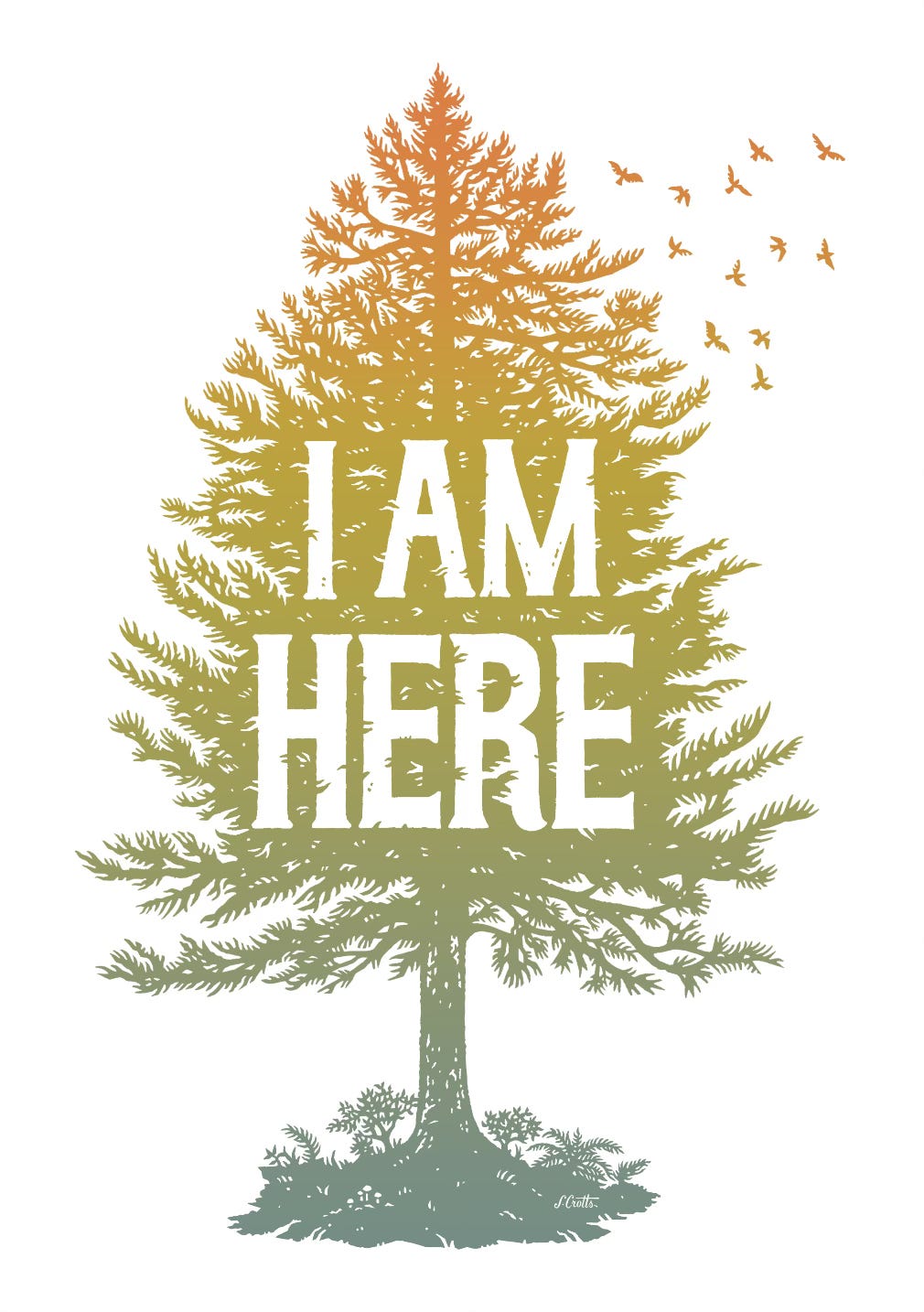
They’re—obviously—limited first editions and I’ll sign every one of them and (as long as supplies last) include an I Am Here print in mail orders of them. I would be honored if you’d sell them out. Once they’re gone, all future copies ordered will be POD. I will sign all of the books we ship out or sell through Nooks through the end of this week.
Ashes to ashes, dust to dust.
But, as I quote in The Understory, “God can do new things with dust.”
I actually think there is an argument to be made that Print on Demand is a viable way for a publisher to run their business. It doesn’t scratch the vanity itch of initial print run numbers and second, third, fourth printings, etc., but I think it can be argued that it is a better stewardship of paper, trees, and product. I just believe this should be disclosed to authors who are assuming their readers are getting a book that looks and feels one way and it turns out they’re getting something else entirely.
I am not interested in writing or marketing splashy books. It is the opposite of what I’m interested in. I want longevity, a slow trickle, timeless.
Except the box of 50 currently under my couch.
It would be very easy to speculate all of the reasons this decision was made—and believe me, in the void of an explanation, I have speculated into oblivion. But, as a friend in publishing told me, “It was probably just an email in someone’s inbox and a box got checked.” I’m choosing to try to believe that and I’d ask that you would too. I still believe the many people I know at this publisher are people with integrity and goodness at their core who care about good books making their way in the world.
I’m under no illusion that it’s any different in the general market but I have more thoughts about this that aren’t for this post.
The Understory is one of the few non-Tolkien books I keep in my Tolkien Office. It's the book I've recommended many times to people who have gone through hard things. I will treasure it even more now.
I'm so sorry that you've had to bury this book in this way. I'm grieving with you. Your quote from the book that you referenced at the end of this post: “God can do new things with dust.” brought the part of The Lord of the Rings to mind when Samwise Gamgee comes home to The Shire to find it's been decimated. Nearly all of the ancient trees have been cut down and he weeps. And then he gets out the box of dust that Galadriel gave him and works to plant saplings all throughout his homeland, carefully sprinkling the dust on each one. Finally Tolkien writes: "And at the end he found that he still had a little of the dust left; so he went to the Three-Farthing Stone, which is as near the centre of the Shire as no matter, and cast it not the air with his blessing."
Tolkien then writes about the following Spring, "Not only was there wonderful sunshine and delicious rain, in due times in perfect measure, but there seemed something more: an air of richness and growth, and a gleam of beauty beyond that of mortal sunshine that flicker and pass upon this Middle-earth."
I hope as you toss this dust onto the grave of your book that "in due times" there will be "something more". And for now, I'm sitting with you in pain of it all from afar.
This is horrifying and heartbreaking. The Understory was my favorite book of 2024 and I’m not sure I’ve read anything I loved as much since. I loved it so much I ordered a bunch of copies directly from your publisher and gave them to friends. Of the handful of books written in the past 5-10 years that deserve longevity as an objectively good book, The Understory is absolutely on that list (if not at the top). I’m only a reader, but imo, your writing is better than 99% of what comes from the “Christian publishing industry.” It’s terribly unjust but thank you for telling us this story and letting us as your readers grieve with you.