

Moving at the Speed of Trust
Friendship ruptures, Learning to Trust Ourselves, Traveling to the Moon and Back

Moon Joy, it’s called, the way every image I see this week is of those who circled the moon, those who love the moon, the moon herself. The trip to the moon seemed so long and then the ricochet back so fast. I missed the moment of detachment, the moment of deployment, the moment of splashdown, but I watched it on repeat for the next two days, every time someone shared it. And in the hopes that there was someone out there like me, I shared it so they might watch it every time too.

The best hours of my fretful sleep patterns come between five am and eight am. I know people who are already awake and doing their best work at five am, but my best work is impossible unless I sleep and I find it difficult to do deeply until after five. I always wake hard though, startled, head thick with vivid dreams, the tendrils of which I carry with me through my morning, wondering how much of it all was real. I woke hard Sunday morning with the words, “Moving at the speed of trust,” still floating in my frontal lobe.1
The night before we watched a new documentary on an old cult, called Trust Me: The False Prophet. If you’ve seen it, you know how brilliant the title is, how many meanings it holds for the participants involved. If you’ve seen it, you know how the filmmaker—the most trustworthy of them all—never says the words because her work is not to have the women trust her, but trust themselves. If you’ve seen it, you know the exact moment you see mothers and daughters and wives and children wake up to their autonomy, resilience, and ability to trust themselves. I sobbed near the end. I thought it was a true crime documentary but it was so much more.

I count on my fingers to our therapist a few weeks ago:
This rupture
This rupture
This rupture
Three relationships, one half my lifetime, one a few years, and one a few months, the tendrils of each rupture still carried with me today, woven into my bones and inert muscles.
One a mentor, one a friend, one a mentee. Above, beside, below. In the church this is the way we tell women to be with other women, find a mentor, be a mentor, have a friend. They teach classes on this. They write books on this. They sell out conferences on this.
What they don’t teach you is how to befriend your own self, how to trust your own heart, how to ask questions of your own experience and intellect and soul, how to wait for the answer that was always there, echoing within you. Instead, we hear, “Trust me.” We say, “Trust me.”
Trust is earned, though, not required. And when it is required, it renders itself untrustworthy.
I have been untrustworthy.
I have also struggled to trust myself because what I felt deep within me did not meet and meld with those who demanded my trust of them. There was always a gulf and I blamed myself for this, thought if I just trusted them more, I could fill in this chasm with the soil of certainty. Instead the space only grew.

The other day, a pink square with red writing on it comes across my feed. It says, “I think midlife is just being who you were at 16, but loving her this time.”2I think I agree except that at 16 I already didn’t trust myself. Neither did I at 13, nor even at nine, or even three. I remember being one year old and screaming for help because I did not trust myself to help myself. Is this a learned behavior or an innate one? Most of this past decade has been tuning out the thunderous static in my head and closing my heart to what they say and slowing my breathing and asking myself the question, what do I say?
Sometimes the answer comes in the night and even though God and I struggle to be on speaking terms these days, I cannot control what God does in the night or between five am and eight am in the morning. Even the Bible says God counsels in the night and who am I to object?
Perhaps it is God and not my dreams that are carried with me in the tendrils of my day. I like that idea. God as silken thread, God as ribbon rainbows, God as fiberoptic flutes through which goodness flows in the form of light.
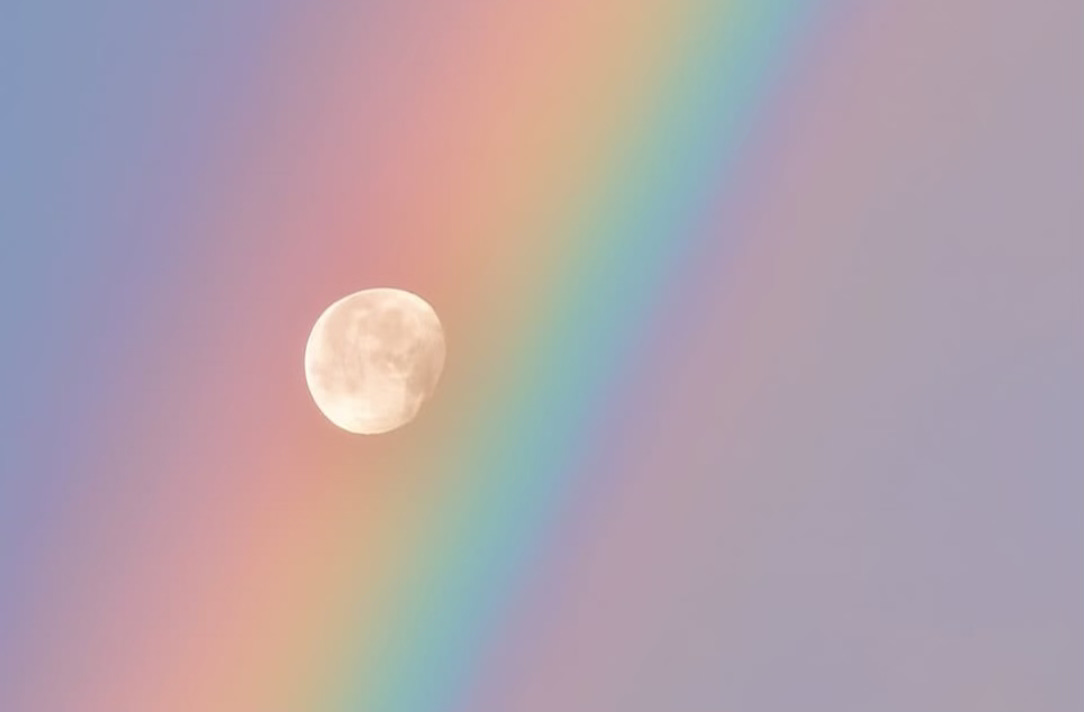

When I forget to be still, to tune out the thunder, I judge myself hard. I judge myself for not trusting people who say they are trustworthy. I judge myself harder for not trusting people who don’t say it but just act trustworthy which is to say they are trustworthy. I judge myself for not moving faster, not sharing more, not saying yes to the invitation to friendship. For being afraid they want me to be a mentor or they want to mentor me or they just want to be my friend because remember the ruptures? I am still hurting.
A friend asks me, “Do you trust yourself?” and I say, “I am learning to,” but I have always been learning to and I want there to be a terminus to it: yes, I do trust myself.

I felt surprised when the Artemis II capsule Orion splashed down in the Pacific, when plumes of red dropped her into the deeps within a mile of the projected target. The space they’d been allotted was 5,524 square miles and they fell within one mile of their target within that allotment. But it wasn’t even that that surprised me the most. What surprised me was how it was all over so soon.
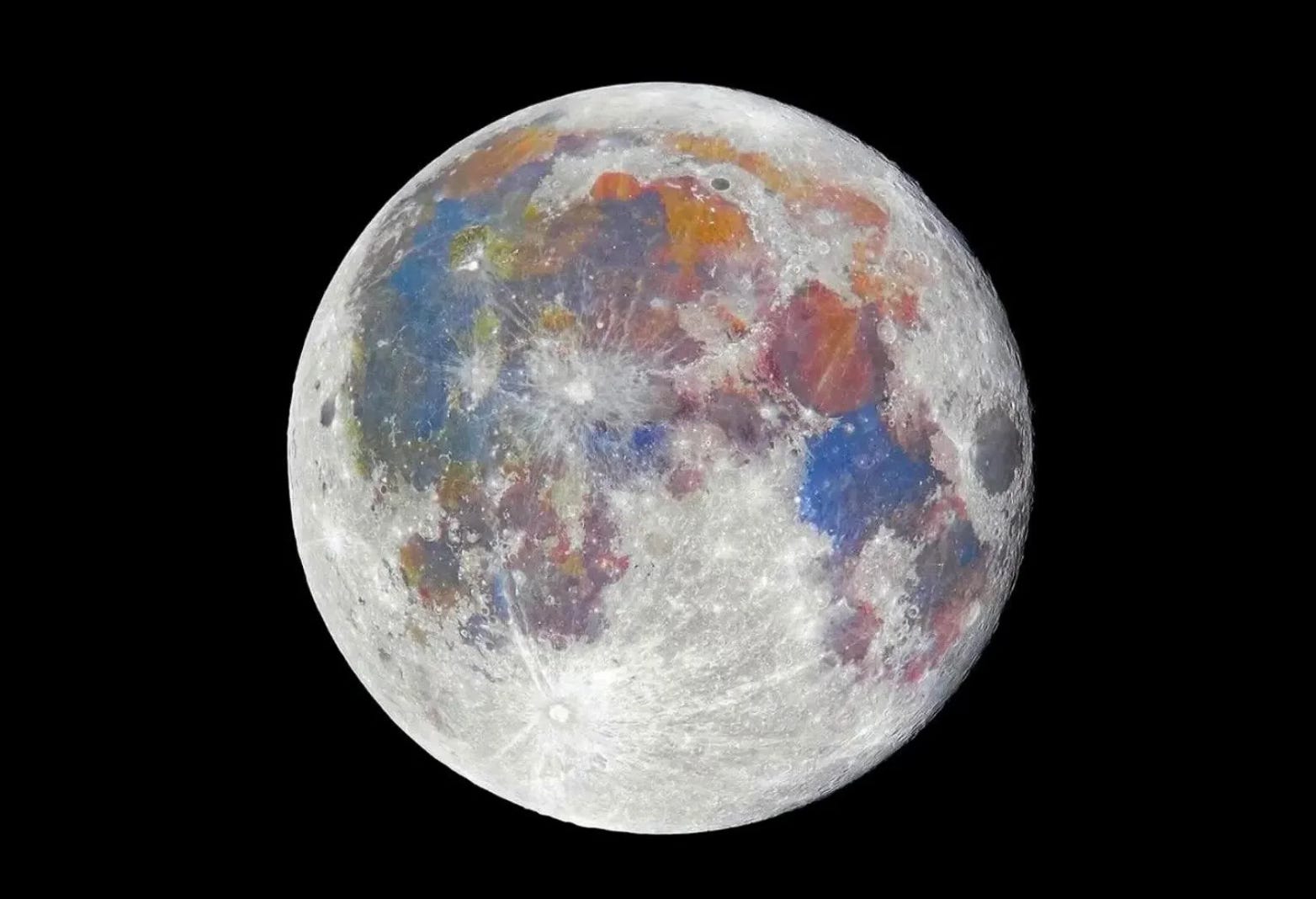
Hadn’t they just shot through the stratosphere, into the solar system? Hadn’t they just shown us the collective work of healing from the pit of grief by naming a new crater Caroll? Hadn’t they just shown us all the colors of the moon? Hadn’t they just gone farther than any human has gone before? How could all of that happened in less than ten days?

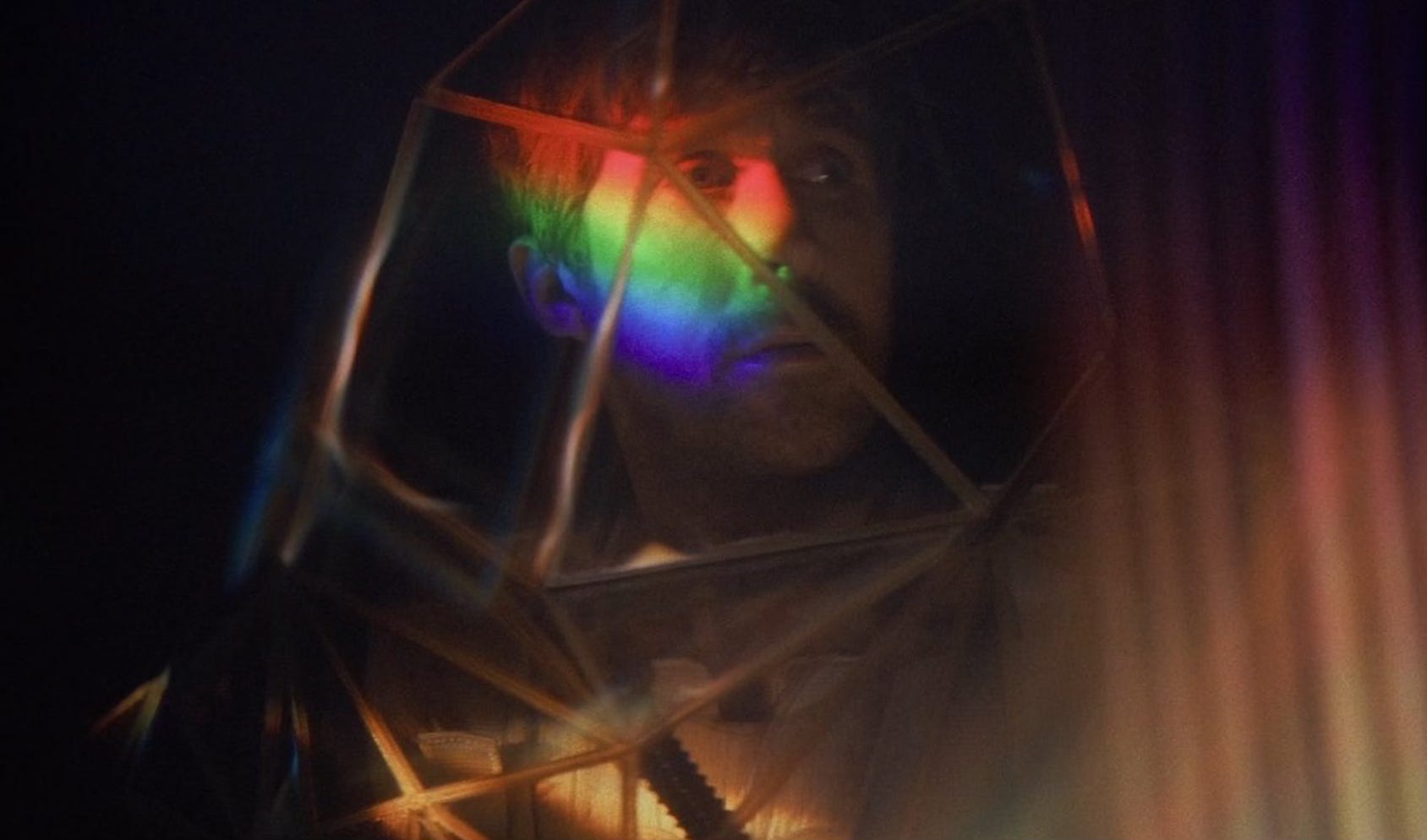
I’ve gone to see Project Hail Mary twice in the theaters and I’ll probably go again. It’s a movie that should be seen to be believed and be seen on the big screen just because.
I remember when Nate and I listened to the audiobook, we were driving from New York to Florida the morning after our stepfather stood up, held his chest, and then died. And how the day before the funeral, I got the call that my brother had been removed from his home, would be arrested, and from there it all splinters, everything splinters.
Two of those ruptures from above, but more of them everywhere, blinding lights of anger, rage, grief, sadness, fear. I remember making impossible decisions, I remember looking for the light, groping in the dark, I remember becoming an enemy not because I wanted anyone to trust me but because I wanted women to trust themselves, children to know trustworthy adults, and men who said, “Trust me, I know it wasn’t that bad,” when it absolutely was that bad, to shut the hell up.
I still want them to shut the hell up.
I want everyone everywhere who says that to shut up.
But even more than that, I want this journey to be over.
I want to have gone farther than I’ve ever gone before and then returned to earth, to the perpetual plod of the everyday, to feel grounded to the land beneath me. I want to trust the gravitational pull of being here, with all its terribleness and tyranny, with its wars and politicians who can’t keep it in their pants, but also with its goodness and light, its tomatoes and books and grand canyons and honeybees and various shades of ocean water and humans doing beautiful and hidden acts of altruism and making art and sharing it with the world and people who ricochet around the moon and come home anyway, who wrap their arms around one another the day after they land and say, “We are just a mirror reflecting you.”
Which is, I think, another way of saying, “Trust you.”

The speed of trust is slower than I thought it should be, slower than I was taught it would be, slower than I wish it was. The speed of trust comes, like the poet said, “taking the time it takes.”
Trust does not come by demands for trust, trust that seems given to those who demand it is not real trust, it’s perverted, twisted, turned allegiance, sometimes blind. Probably blind. Blind trust is said to be what faith is, believing in what we cannot see. But if God is true and the world is made and everything in the universe is God’s and therefore ours too, then the evidence is everywhere, but mostly within us. Within you and within me because we are God’s too and God is within us.
I can’t prove that to you but why would I try? That’s just asking you to trust me and I won’t do that, not anymore.
Instead, we go, slow, turning off the thunderous noise, tuning into the stillest and smallest sounds within us, moving at the opposite speed of light but perhaps at the speed of the truest kind of light. The light of God within us.
If you’re reading this in email (which 98% of you do!), consider pressing the heart (♡) at the bottom or top of this email. It helps my work get more eyeballs on it, which is nice for me and kind of you!
A reader pointed out that “speed of trust” was used in this piece from a few years ago. I wasn’t familiar with the piece but have no problem giving credit where it’s due! Once she pointed that out, I googled it and it was also the title of a 2008 book by Steven Covey. Again, I wasn’t familiar but once again, credit where credit is due =)
My body and mind is tired today and I’m struggling for the right words to say in response to this heartbreaking, heartfelt post. So i will say this: I see you. I hear the raw pain and the budding self-trust. You are a gift to all of us who struggle the same. Your words are such a friend to me. For this i am grateful.
Your post today is effectually orbital. As is trust when broken at those specific junctures in your life. And frankly, I don’t trust AI stating that the sweetspot of sleep is in the first hour. Used to be 3-6, or 5-8. For me, the latter. You are not alone. :)