

Have You Heard the Laughter?
On being awakened in the middle of the night by something miraculous

There is a line near the end of Mary Oliver’s poem, Heavy, that I think about often. Heavy is a poem about grief, about the pain of it, the length of it, the bending, near breaking of it. But the line, the line I think about a lot, it is one about laughter, the surprise of it, how it “comes, now and again, / out of my startled mouth.”
I love that line. Grief is many things and sometimes it is the surprise of laughter in the midst of all that darkness.
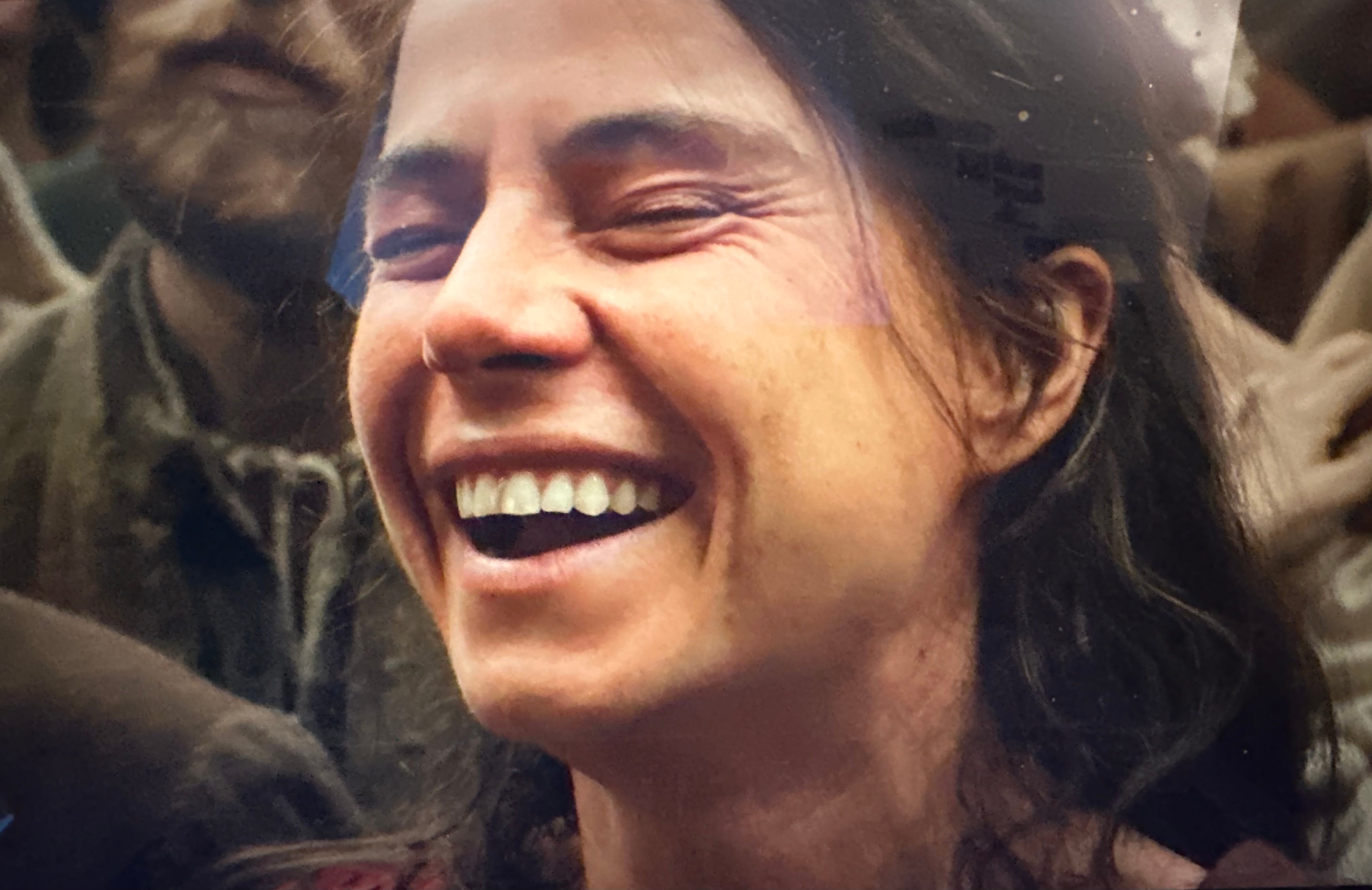
I thought of this while we watched Hamnet again. There is this final scene. Do you know the one? I hope you know the one. Where the grief across the face of a mother is so potent, so full of angst, it is palpable. You can taste it, the tears, the dirt lined crevices of her face, the ache you know sits just behind her tongue, in her larynx, her throat, caught, it seems, and never to release.
And then, in the next moment, the very next moment, her face widens and she laughs. It isn’t even a smile, peaceful, placating. It is a wild and unbridled laugh, the kind that can only come from a place where the ache has just recently been voided.
It is a vulnerability to laugh from a place like that.

We have two friends who we love and we go out to eat sometimes over exotic or ordinary food. One of them has asked me to pray over the meal twice now, to bless the food we are about to receive.
“I can’t,” I’ve told him twice now, each time the can’t stuck in my larynx, near where the grief is also stuck. Because the truth is, I can’t. It isn’t that I won’t or shouldn’t or don’t want to or am afraid of what the words in my prayers might look like or sound like to me or you or God, it is that I simply just can’t.
A few weeks ago, a night or two after he last asked me to pray and I said I can’t, we were all gathered together with writers we love, all of us reading aloud some piece or poem or prose of words we’ve cobbled together. I was one of the last to read. I couldn’t.
But then I remembered another line from Mary’s poem, “So I went practicing.
Have you noticed?” And I remembered a piece I’d written almost exactly a year ago about practicing and so I read that. The whole time I read, I felt my windpipe closing, a live coal caught in my throat, burning and blocking, the strangulating work of trying when everything in me said, “I can’t.”
This, I suppose, is the work of practicing.

A few nights ago, I was near sleep and something alerted me awake hard. The dogs were sleeping, so was Nate, the fan was sounding and so too the humidifier, no traffic sounds on the street below us. I lay there in the nighttime sounds and did not know what had woken me.
I should remind you now that I am not given to belief in the miraculous. I find stories of healing rare and wanting and, to my shame, the story of the resurrection improbable on some days. I have never experienced God’s provision in some inexplicable way, nor have I heard God’s voice, but once, and even that came in the words of a poet, not the scriptures. When I hear others speak of God’s protection or provision or providence, my brain translates without my trying: luck, fate, or accident.